|
Name of the Department: Department of
Chemistry
|
|||
|
Sl.No
|
Name of the
Student
|
Name of the
project
|
Name of the
Supervisor
|
|
1.
|
Madhusmita
Devi
|
Estimation of Na, K , phosphate and
flouride in ground and surface water of
Tezpur region.
|
Dr
Pankaj Hazarika
|
|
2.
|
Uttam
Biswakarma
|
Estimation of Na, K, Ca & Mg in ground
and surface water of Tezpur Municipality
region.
|
Dr
Pankaj Hazarika
|
|
3.
|
Soma
Das
|
pKa Shift of Bromocresol Purple in Aqueous
Solution of Ionic Surfactants.
|
Dr
Palashmoni Saikia
|
|
4.
|
Ajoy
Chamuah
|
Effect of Dye-Surfactant Interaction
on the Gibbs Surface Excess of Ionic Surfactants.
|
Dr
Palashmoni Saikia
|
|
5.
|
Nibedita
Sarkar
|
Synthesis and Spectroscopic characterization
of Aspirin & β-naphthylbenzoate and their derivatives.
|
Dr
Dharmendra Kr. Sharma
|
|
6.
|
Pankaj
Deka
|
Synthesis and Spectroscopic
characterization of p-nitro acetanilide & 2,4,6-trobromoaniline and their
derivatives.
|
Dr
Dharmendra Kr. Sharma
|
|
7.
|
Jintu
Saharia
|
Synthesis and Spectroscopic
characterization of Hexaaminecobalt(III)chloride.
|
Prof.
Pronil Kr. Bora
|
|
8.
|
Nerswn
Narzary
|
Synthesis and Spectroscopic
characterization of Hexaaminenickel(II)chloride.
|
Prof.
Pronil Kr. Bora
|
|
9.
|
Nitu
Kumari
|
Analysis of some physical parameters
of water samples collected from in and around Darrang College Campus.
|
Prof.
Biswajit Kakoty
|
|
10.
|
Bittu
Lama
|
Analysis of some physical parameters
of soil samples collected from in and around Darrang College Campus.
|
Prof.
Biswajit Kakoty
|
|
11.
|
Sashi
Roy
|
Synthesis and Spectroscopic
characterization of p-bromo acetanilide & benzyl alcohol and their
derivatives.
|
Prof.
Tumpa Paul
|
|
12.
|
Upen
Bora
|
Synthesis and Spectroscopic
characterization of m-dinitro benzene & benzil and their derivatives.
|
Prof.
Tumpa Paul
|
|
13.
|
Niharika
Keot
|
Extraction and Spectroscopic
Characterization of Caffeine from some commercial available tea brands.
|
Prof.
Sanjib Chetry
|
|
14.
|
Bhaskarjyoti
Boiragi
|
Illustration of the Quantum theory of
Superposition: Schrodinger's cat paradox.
|
Prof.
Sanjib Chetry
|
|
15.
|
Kaushik
Nath
|
Synthesis and Characterization of
Tris-(acetylacetonato) Mn(III) complex by Adopting Green Method.
|
Dr
Bipul Ch. Paul
|
|
16.
|
Priyanka
Dowerah
|
Synthesis and Characterization of
Tris-(acetylacetonato) Fe(III) complex by Adopting Green Method.
|
Dr
Bipul Ch. Paul
|
Sunday, 30 March 2014
LIST OF PROJECT WORK ASSIGNED TO B.Sc 6th SEMESTER (CHEMISTRY MAJOR) STUDENTS SESSION (2013-14)

pKa Shift of Bromocresol Purple in Aqueous
Solution of Ionic Surfactants
An Investigatory project Submitted to the Department
of Chemistry, Darrang College

For
partial fulfillment of the Bachelors Degree in Science (Chemistry Honours)
under Gauhati University

Submitted
by
Soma Das
Reg No. of
201
Session:
Under the
Supervision of
Dr Palashmoni
Saikia
Associate
Professor
Department of
Chemistry
Darrang College
Friday, 22 November 2013
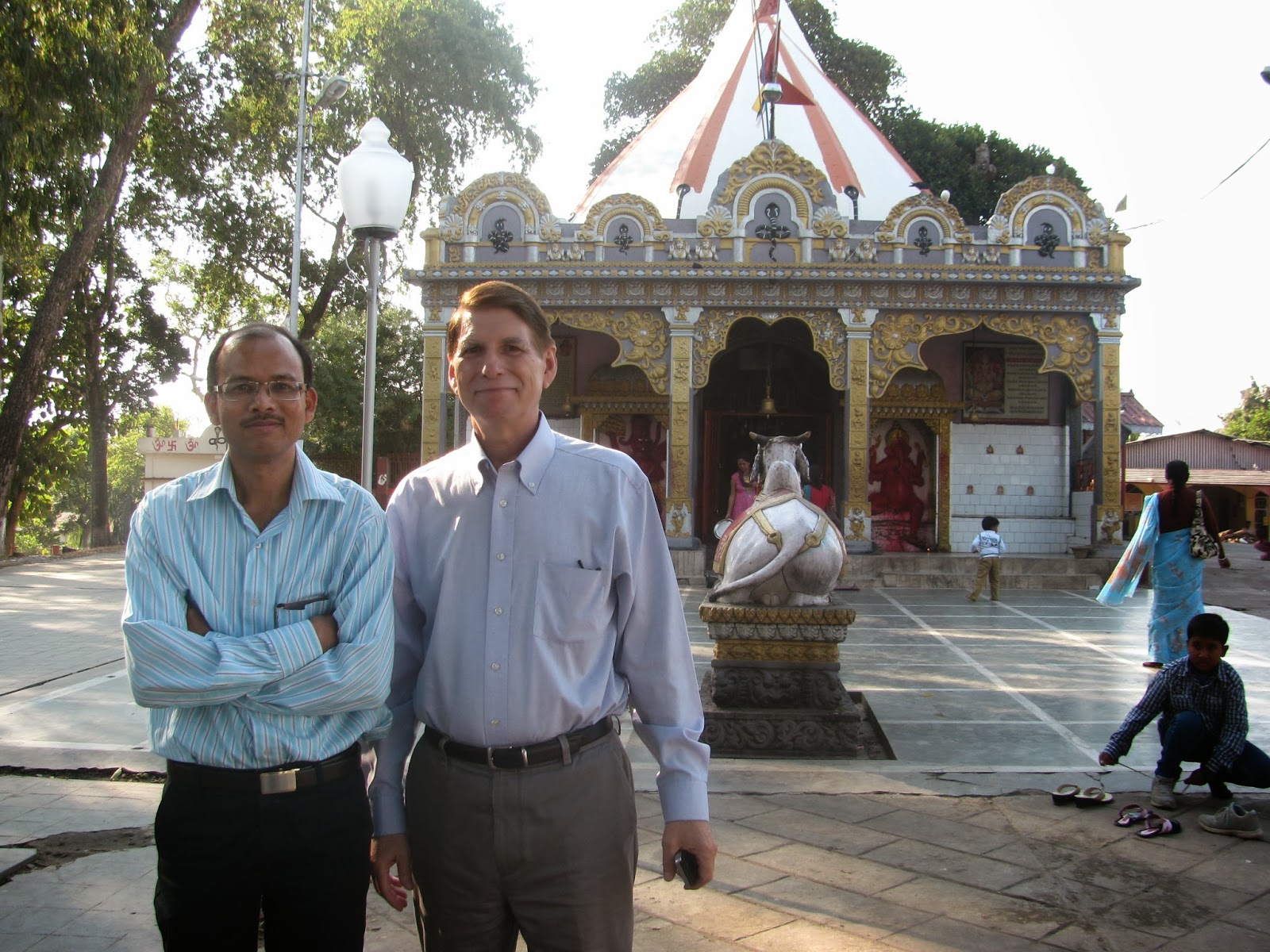
INVITED TALK BY PROF. LYMAN H. RICKARD
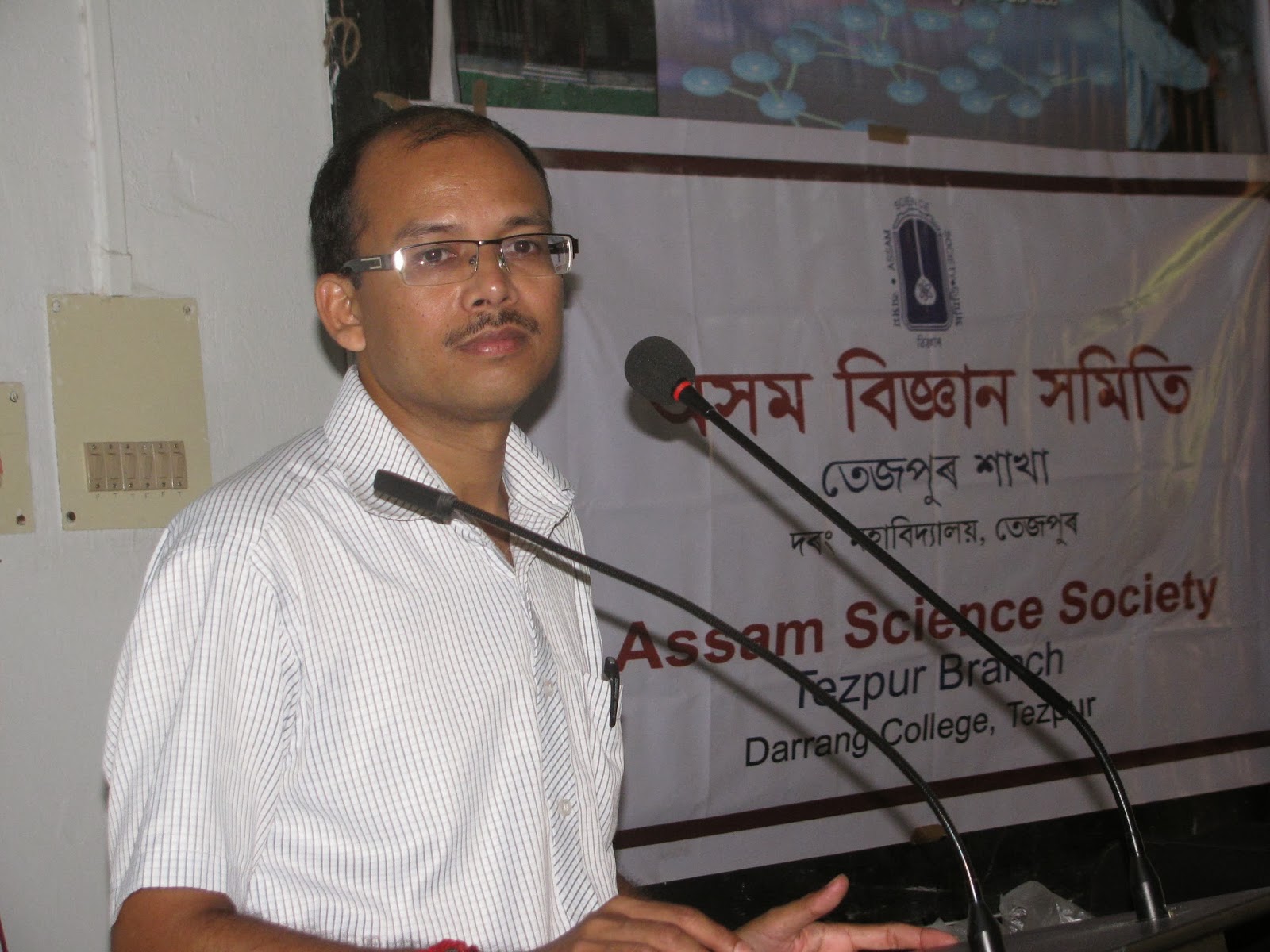
An invited talk on Higher Education in the United States was organised by the Department of Chemistry in collaboration with Assam Science Society,Tezpur Branch on 22-11-2013. It was delivered by Dr Lyman H. Rickard of Millersville University, Pennyslavania,USA. He is Fulbright Scholar.




Friday, 25 October 2013
Mole Day Celebration , 23rd October,2013
MOLE DAY CELEBRATION
23rd October, 2013
Theme: ANIMOLE KINGDOM




Monday, 8 July 2013
SAMPLE , CLASS 12 PROJECT WORK 2013
REPORT
OF A PROJECT WORK ON
ISOLATION
OF CAESIN FROM DIFFERENT SAMPLES OF MILK AND ITS CHARACTERIZATION
SUBMITTED
TO

The
Department of Chemistry, Darrang College,
Tezpur-784001,
Assam
For Partial Fulfillment
of HS Final Year Chemistry Practical Examination 2012
SUBMITTED
BY
ANKUR
JYOTI DAS
ROLL……………………
NO…………………………………..
REGISTRATION
NO………………………. OF ……………………………
Session:
2012-13
Under the Guidance of
Dr Palashmoni Saikia
Assistant
Professor, Department of Chemistry
Darrang College,
Tezpur
This
is to certify that this dissertation titled “Isolation of Casein from different
samples of milk and its characterization” submitted by AnkurJyoti Das (HS Final Year) to the
Department of Chemistry, Darrang College,Tezpur, for the partial fulfillment of
the HS Chemistry Prcatical Examination conducted by AHSEC, was carried under my
guidance and supervision during the academic year 2011-12.
I
wish him success in life.
Date: Dr Palashmoni Saikia
Assistant Professor
Department of
Chemistry
Darrang College
Acknowledgement
At
the outset I would like to express my sincere gratitude and thanks to my
chemistry mentor Prof.Tumpa Paulfor
her vital support and guidance in completing this project work.
I
express my special thanks and gratitude to my teacher DrPalashmoniSaikiawho introduced us to the fascinating chemistry of
biomolecules, casein in particular.
I
am grateful toProf.Pronil Kumar Bora,
the HOD, Department of Chemistry for providing us the lab facilities and
chemicals required for carrying out this investigation.
My
sincere thank goes to all my friends and well-wishers without whose inspiration
and support this report would have never been materialized.
Last but not the least I thank my mom for her
encouragement and inspiration without which I would have never been able to
complete this project.
(AnkurJyoti Das) Dated:
“Little
Miss Muffet sat on atuffet, Eating of curds and whey….”
Mother Goose (nursery rhyme)
Milk is the normal product of mammary gland
secretion. It is the most nutritionally complete food found in nature. Rich in
vitamins, carbohydrate, proteins and minerals, milk serves as the best food for
the infants. Animal milks products are the most priced food product. No dish is
complete without butter, cheese or curd. Being a complex biological mixture of
chemicals, isolation and characterization of the components of milk is quite
challenging.
Chemically milk is an oil-in-water emulsionwhere
fatis dispersed as micronsized globules. The fat emulsion is stabilized by
complex phospholipids and proteins that are adsorbed on the surfaces of the
globules.
Among the proteins present in proteins,
casein constitute the major percentage. Casein is a phosphoprotein and exist as
calcium caseinate. Being a phosphoprotein it is amphiphatic and can form
micelle. Micellization of casein makes it soluble in milk. Casein has
an isoelectric point of pH
4.6. Therefore it is soluble as its salt
in milk which has a pH of about 6.6.
If the pH of milk is brought down
below 4.6, casein precipates due protonation of its phosphate head group.
When milk is acidified, it is transformed
into a solidcomponent, called curd, and a liquid component called whey. The
curds contain thebutterfat and casein. The carbohydrate, lactose, is present in
the whey. Curding of milk is due to the bacterial conversion of galactose into
acetic acid.Since the production of the lactic acid also lowers
the pH of the milk, the milk clots when it sours due to the precipitation of
casein.
Inthis
project we will isolate casein from milk and carry out some qualitative tests
forprotein.The aim of the project is determine quantitatively the percentage of
casein present in three different samples of milk viz., cow, goat and
buffalo.
Contents
|
|
Page
No
|
|
Chapter-1:Introduction
1.1
Milk
1.2
Composition of Milk
1.3
Casein
1.4
Curding of Milk
1.5
Milk and health
|
1
|
|
Chapter-2:
Isolation of Casein
2.1
Objective
2.2 Methodology
2.3
Things Required
2.4
Procedure
2.5
Observation
2.6 Yield
2.7 Precaution
|
|
|
Chapter-3:
Characterization of Casein
3.1 Biuret Test
3.2 Xanthoproteic Test
|
|
|
Chapter-4: Conclusion
|
|
|
Bibliography
|
|
CHEMISTRY CLASS 12 PROJECT 2013
COMPARATIVE STUDY OF SOME COMMERCIAL ANTACIDS
INTRODUCTION:
Gastric acid is a
digestive fluid, formed in the stomach. It has a pH of 1.5 to 3.5 and is composed of hydrochloric acid (HCl) (around 0.5%, or 5000 parts per million)
as high as 0.1 M, and large quantities of potassium chloride (KCl) and sodium chloride (NaCl). The acid plays a key role in digestion of proteins, by
activating digestive enzymes,
and making ingested proteins unravel so that digestive enzymes break down the
long chains of amino acids.
Gastric acid is produced by cells lining the stomach, which
are coupled to systems to increase acid production when needed. Other cells in
the stomach produce bicarbonate, a base,
to buffer the fluid, ensuring
that it does not become too acidic. These cells also produce mucus, which forms a viscous physical barrier to prevent gastric
acid from damaging the stomach. Cells in the beginning of the small intestine,
or duodenum, further
produce large amounts of bicarbonate to completely neutralize any gastric acid
that passes further down into the digestive tract.
The presence of gastric acid in the stomach and its
function in digestion was first characterized by United States Army surgeon William Beaumont around 1830. Beaumont was able to study the stomach action
of fur trapper Alexis St. Martin due to the latter's gastric fistula.
Gastric acid is produced by parietal cells (also called oxyntic cells) in the
stomach. Its secretion is a complex and relatively energetically expensive
process. Parietal cells contain an extensive secretory network (called canaliculi) from which the gastric acid is secreted
into the lumen of the stomach.
These cells are part of epithelial fundic glands in the gastric mucosa. The pH of gastric acid is 1.35 to 3.5 in the human stomach lumen, the
acidity being maintained by the proton pump H+/K+ ATPase. The parietal cell releases bicarbonate into the
blood stream in the process, which causes a temporary rise of pH in the blood,
known as alkaline tide.
The resulting highly acidic environment in the stomach
lumen causes proteins from food to
lose their characteristic folded structure (or denature). This exposes the protein's peptide bonds. The chief cells of the
stomach secrete enzymes for protein breakdown (inactive pepsinogen and rennin). Hydrochloric acid activates pepsinogen into the enzyme pepsin, which then helps
digestion by breaking the bonds linking amino acids, a
process known as proteolysis. In
addition, many microorganisms have their growth inhibited by such an acidic environment,
which is helpful to prevent infection.
.
Antacids are bases used to
neutralize the acid that causes heartburn. Despite the many commercial brand,
almost all antacids act on excess stomach acid by neutralizing it with weak
bases. The most common of these bases are hydroxides, carbonates, or bicarbonates.
The following table contains a list of the active ingredients found in several
common commercial antacids, and the reactions by which these antacids
neutralize the HCl in stomach acid.
|
Compound
|
Chemical Formula
|
Chemical Reaction
|
|
Aluminum hydroxide
|
Al(OH)3
|
Al(OH)3(s) + 3 HCl(aq)
-----> AlCl3(aq) + 3 H2O(l)
|
|
Calcium carbonate
|
CaCO3
|
CaCO3(s) + 2 HCl(aq)
-----> CaCl2(aq) + H2O(l) + CO2(g)
|
|
Magnesium carbonate
|
MgCO3
|
MgCO3(s) + 2 HCl(aq)
-----> MgCl2(aq) + H2O(l) + CO2(g)
|
|
Magnesium hydroxide
|
Mg(OH)2
|
Mg(OH)2(s) + 2 HCl(aq)
-----> MgCl2(aq) + 2 H2O(l)
|
|
Sodium bicarbonate
|
NaHCO3
|
NaHCO3(aq) + HCl(aq)
-----> NaCl(aq) + H2O(l) + CO2(g)
|
AIM OF THE EXPERIMENT:
In this experiment, several brands of antacids will be analyzed to
determine the number of moles of acid neutralized per tablet and the cost
analysis of each tablet. The analytical procedure used is known as back
titration. In this procedure, a known amount of HCl, which is in excess,
will be reacted with a weighed portion of a ground antacid tablet. The HCl remaining
after the antacid neutralization reaction occurs will be determined by
titration with a standardized NaOH solution to a phenolphthalein endpoint. The
number of moles of HCl neutralized by the antacid (HClneutralized)
is the difference between the moles of HCl initially present in the excess (HClinitial)
and the moles of HCl titrated by the NaOH (HCltitrated).
HClinitial – HCltitrated = HClneutralized
Saturday, 18 May 2013


Subscribe to:
Posts (Atom)